
Eastern Accents
Closing The Trust Gap
No showroom.
No sales rep.
No brand reputation shoppers already knew.
Here's how the product page learned to close the gap.
Scroll Down ⬇
UX Writing Information Architecture (IA) Taxonomy Design









PROJECT METADATA
The Basics
ROLES
UX Writing
MEMBERS
Suleyman Sarigoz (me)
Botan Erpolat (supervisor)
INDUSTRY
E-commerce
TIMELINE
4 Months
TOOLS
EtsyAdmin
Etsyhunt
ChatGPT
PROJECT SUMMARY ★
The TL;DR
THE PROBLEM
Traffic Without Trust
Plankroad, Eastern Accents' sister Etsy store, had steady traffic but poor conversion, product pages read like trade spec sheets, offering no trust signals for shoppers used to relying on a showroom or sales rep.
THE INSIGHT
Visibility Wasn't the Problem
Research revealed the real issue was trust, not visibility.
THE SOLUTION
Rebuilding Trust
I rewrote UX copy and restructured taxonomy and tagging across 650 listings.
THE RESULT
Trust, Measured
A 48% increase in conversion and a 25% increase in sample link clicks, without any pricing changes.
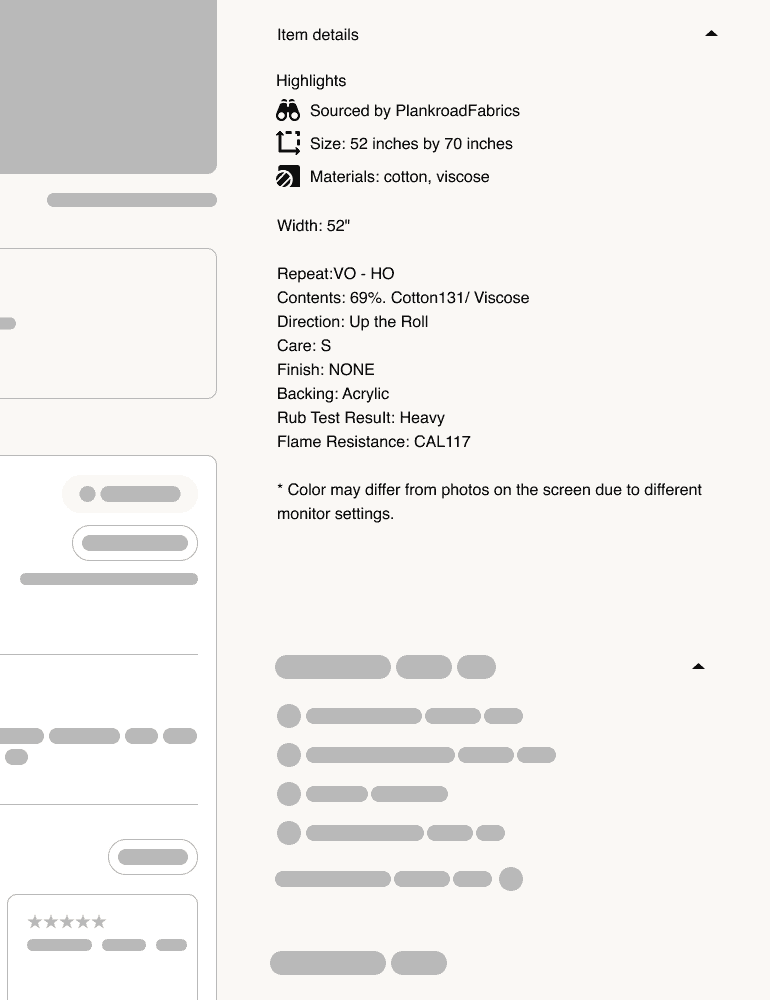
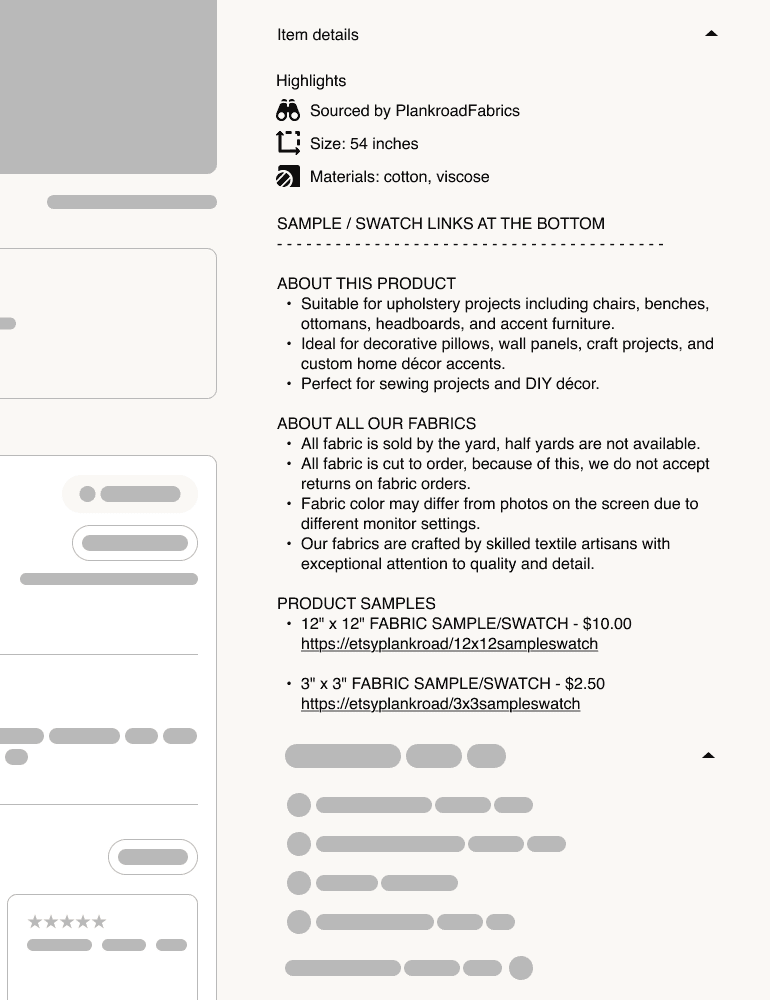
BEFORE VS AFTER
See the Difference Below
PROJECT CONTRAINTS ◼︎
Working Within Real Limits
BUDGET & SCOPE
Doing More With Less
Management's priority was maximum impact at minimum spend, ruling out costly interventions like pricing changes or paid campaigns.
ROLE SCOPE
Earning a Bigger Seat
I was initially brought on strictly as a tag optimizer, and had to advocate for a broader UX writing role before I could address the deeper trust issues I was seeing.
RESEARCH ACCESS
Reading Between the Data
Without direct access to Etsy shoppers, my research relied on indirect signals, clickpath data and customer service reports, rather than firsthand conversations with the people actually making the decision to buy.
COMPANY BACKGROUND ♣︎
One Brand, Two Worlds
COMPANY BACKGROUND
Who Is Eastern Accents?
Eastern Accents is a Chicago-based luxury home textile brand founded in 1989. For over 35 years, the family-owned company has designed and manufactured premium bedding collections, decorative pillows, and fine linens entirely in-house. Every piece moves from initial concept to final stitch within a single facility on the city's northwest side.
Their 2 Tier Business Model
This two-tier structure creates an inherent tension. A brand built on exclusivity and craftsmanship is selling surplus goods on a marketplace platform where buyers expect transparency, value signals, and instant trust, without the benefit of a showroom, a sales rep, or a brand reputation they already know.
Eastern Accents
- Sells flagship collections direct-to-trade.
- Targets interior designers and high-end hospitality clients.
- Prices at a premium, in line with trade and showroom expectations.
Plankroad
- Operates as Eastern Accents' sister store, a secondary Etsy storefront.
- Resells unsold Eastern Accents inventory.
- Targets a broader, middle-class consumer market.
- Prices more accessibly than the flagship line.
PROBLEM & SOLUTION ✖︎❤︎
From Traffic to Trust
THE PROBLEM
Traffic Without Trust
Plankroad's 1,800+ product catalog drew steady traffic through an established Etsy presence, yet conversion consistently lagged behind. Product pages had the specs. They didn't have the trust a showroom or sales rep would normally provide, and shoppers were leaving before they bought.
THE SOLUTION
Rebuilding Trust, Page by Page
I reframed the engagement around conversion, not traffic. Working across all 650 product listings, I rewrote UX copy and restructured taxonomy and tagging to give shoppers the confidence a showroom or sales rep would normally provide, without either one.
THE RESEARCH ◉
Listening Past the Traffic Numbers
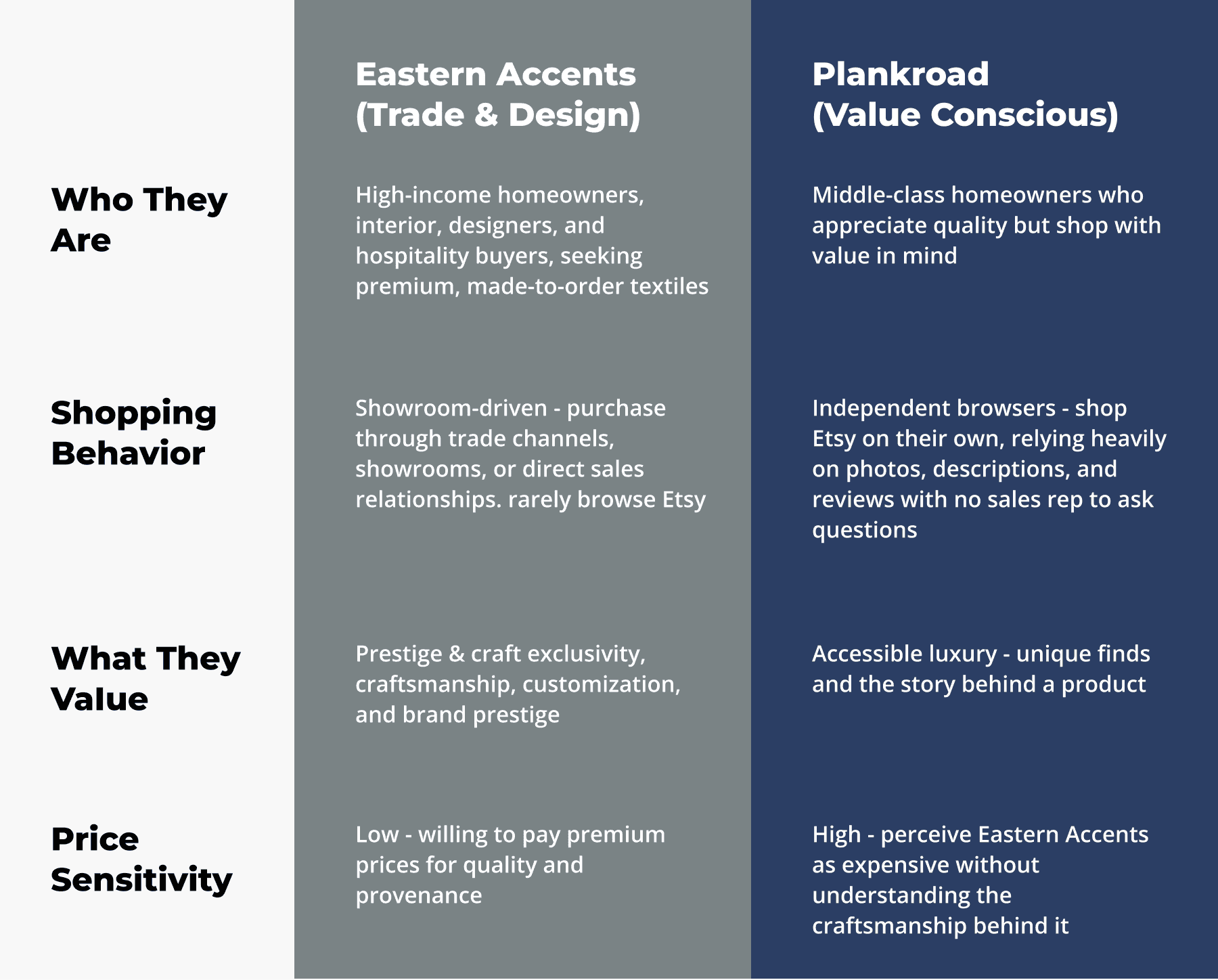
TARGET CUSTOMERS
Two Buyers, Two Expectations
Understanding the audience gap between Eastern Accents and Plankroad was critical to diagnosing why the storefront was underperforming.
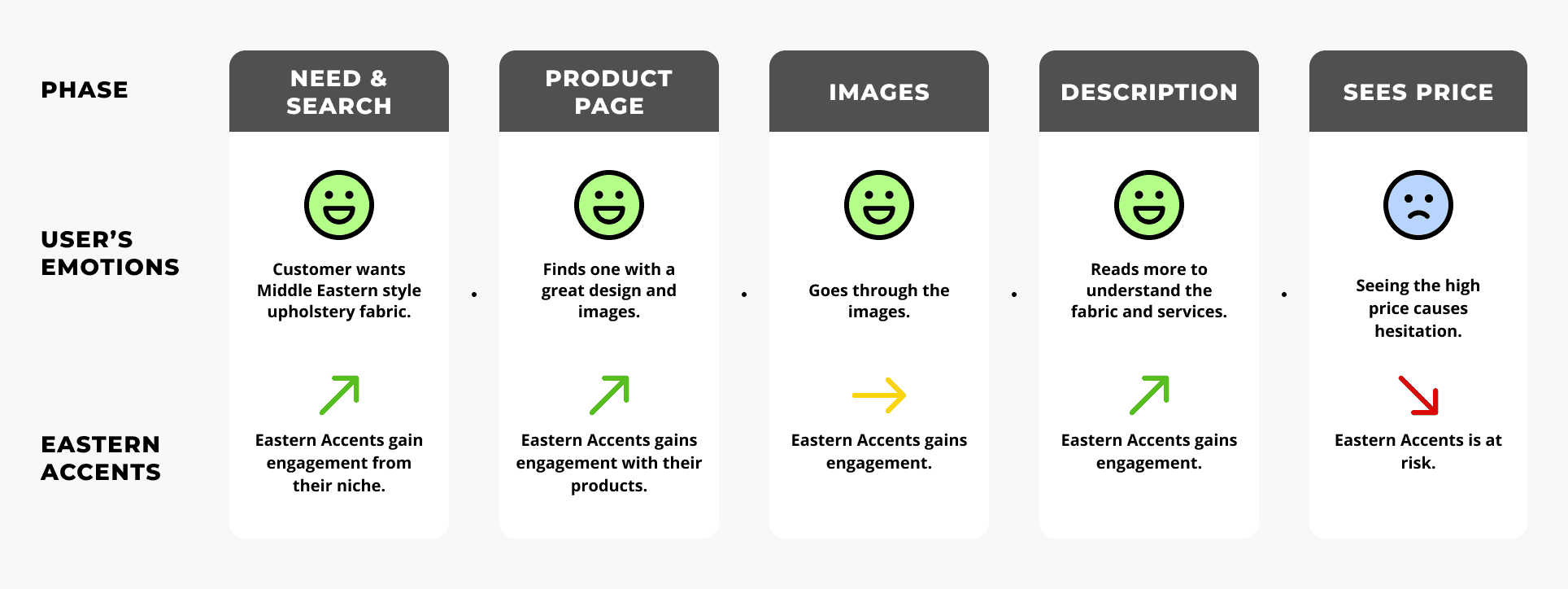
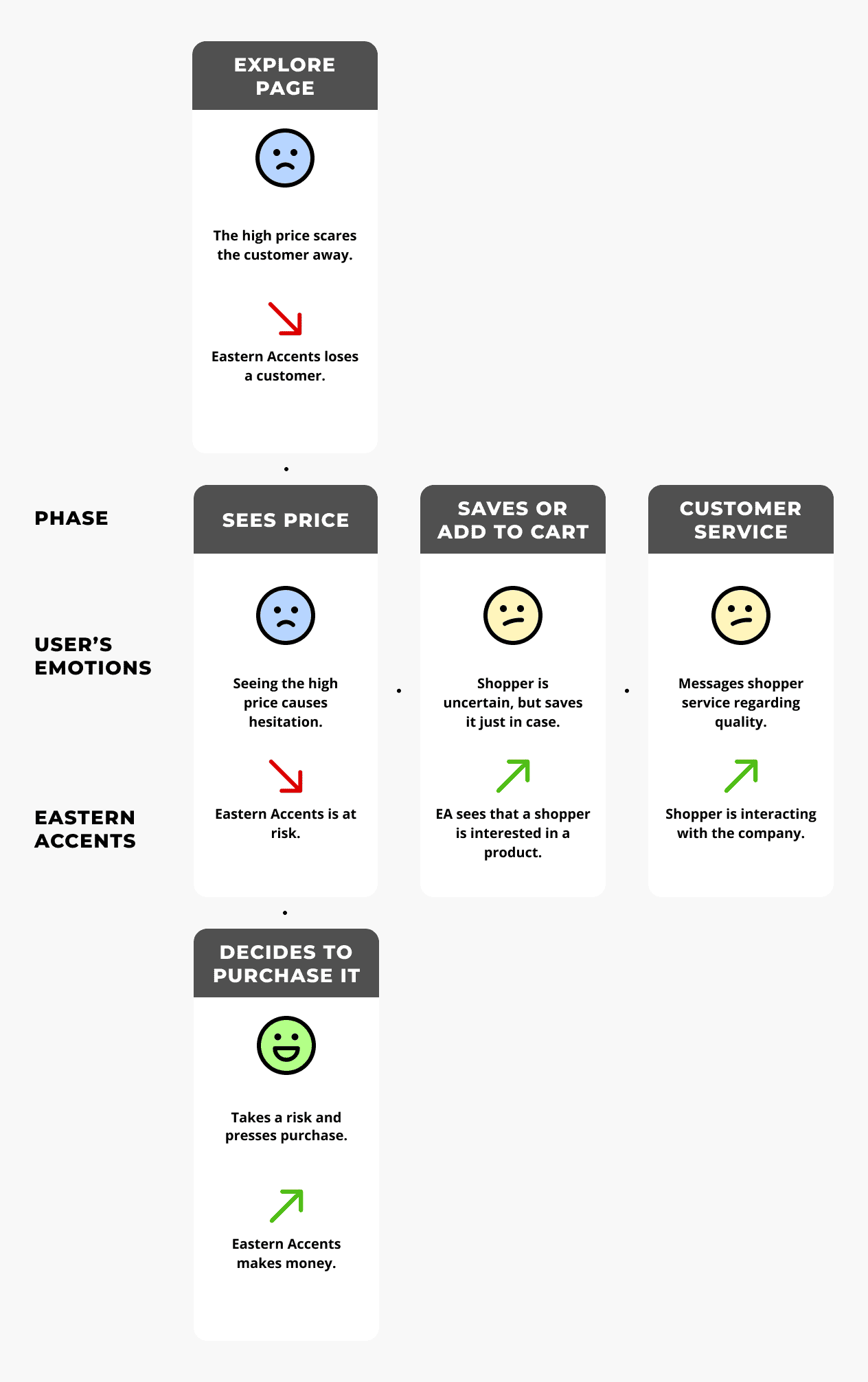
USER JOURNEY MAP 1 - THE PRIMARY PATH
How Most Shoppers Actually Move
This map traces the path taken by the majority of users, based on Etsy clickpath analytics and customer service feedback. It represents the default shopping experience most visitors encounter, and the primary target for optimization.
USER JOURNEY MAP 2 - DIVERGENT PATHS
Where Shoppers Hesitated
While most users followed the primary path, clickpath data revealed several alternate routes taken by a smaller subset of shoppers. These users often circled back, re-searched, or compared multiple listings before converting, or instead of converting at all. The divergent paths pointed to friction points that weren't visible in the primary journey alone.
DISCUSSION WITH STAKEHOLDERS
Two Teams, Two Theories
CUSTOMER SERVICE TEAM
What Shoppers Were Really Asking
The customer service team was the most valuable source of ground-level insight in this project.
Quality Anxiety Was Pervasive
Customers repeatedly asked about material quality and durability — even when that information was already present in the product description. This told me the existing copy wasn't doing its job. Information was there. Trust was not.
Price Was The Most Common Complaint
Customers frequently requested discount codes, signaling that Plankroad's price points felt unjustified relative to the Etsy marketplace context.
Photography Was Not The Problem
The team produced high-quality images for every listing — multiple angles, close-ups, and fabric detail shots. Visual presentation was already strong.
MANAGEMENT TEAM
What the Business Believed
Management came into this engagement with a clear hypothesis and firm constraints.
Their Constraints: No Price Reductions
"Prices are already low enough" — and no artificial price manipulation strategies, which were dismissed as too much effort for too little return.
Their Priority: Max Impact, Min Spend
They wanted a high-return, low-cost solution with results they could see quickly.
Their Belief: More Traffic = More Revenue
Tag optimization was the lever they wanted pulled.
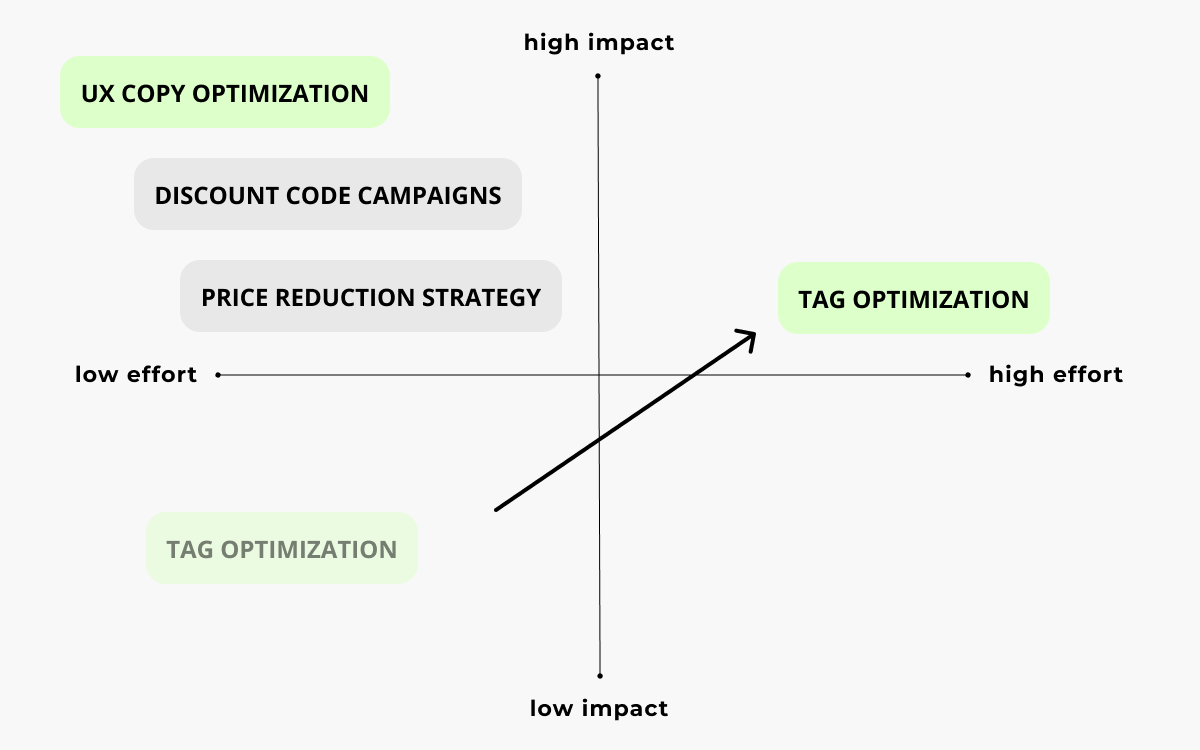
IMPACT & EFFORT MATRIX - PERCEIVED
Choosing the Right Lever
This matrix shows where each strategy was expected to land in terms of impact and effort, based on management's initial assumptions.
Management immediately ruled out price reduction and discount campaigns, stating that prices were already set to maintain profit margins. This narrowed the path forward to tag and copy optimization.
DESIGN CHANGES ⏏︎
Rewriting the Page
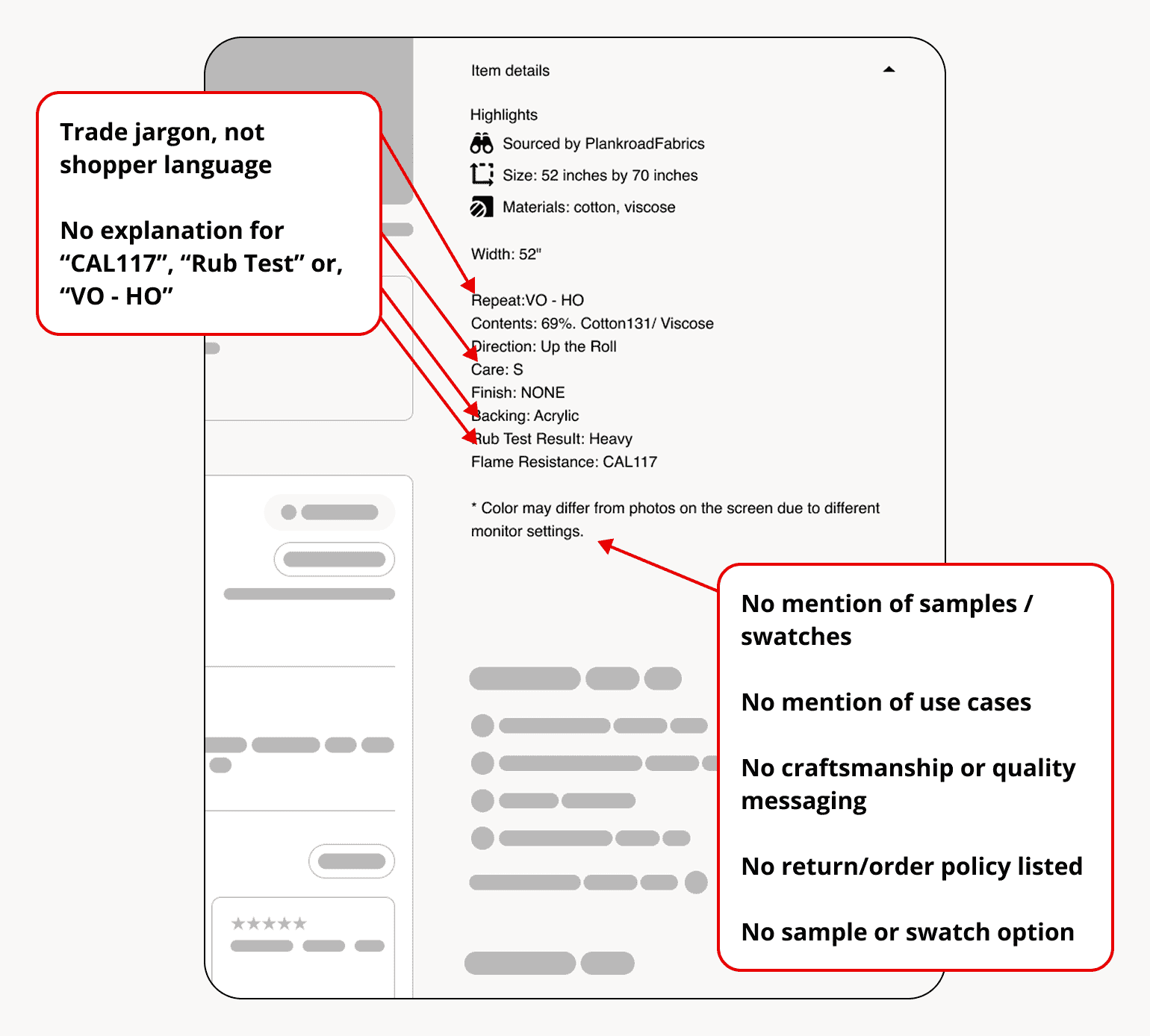
Before
A manufacturer spec sheet built for trade professionals.
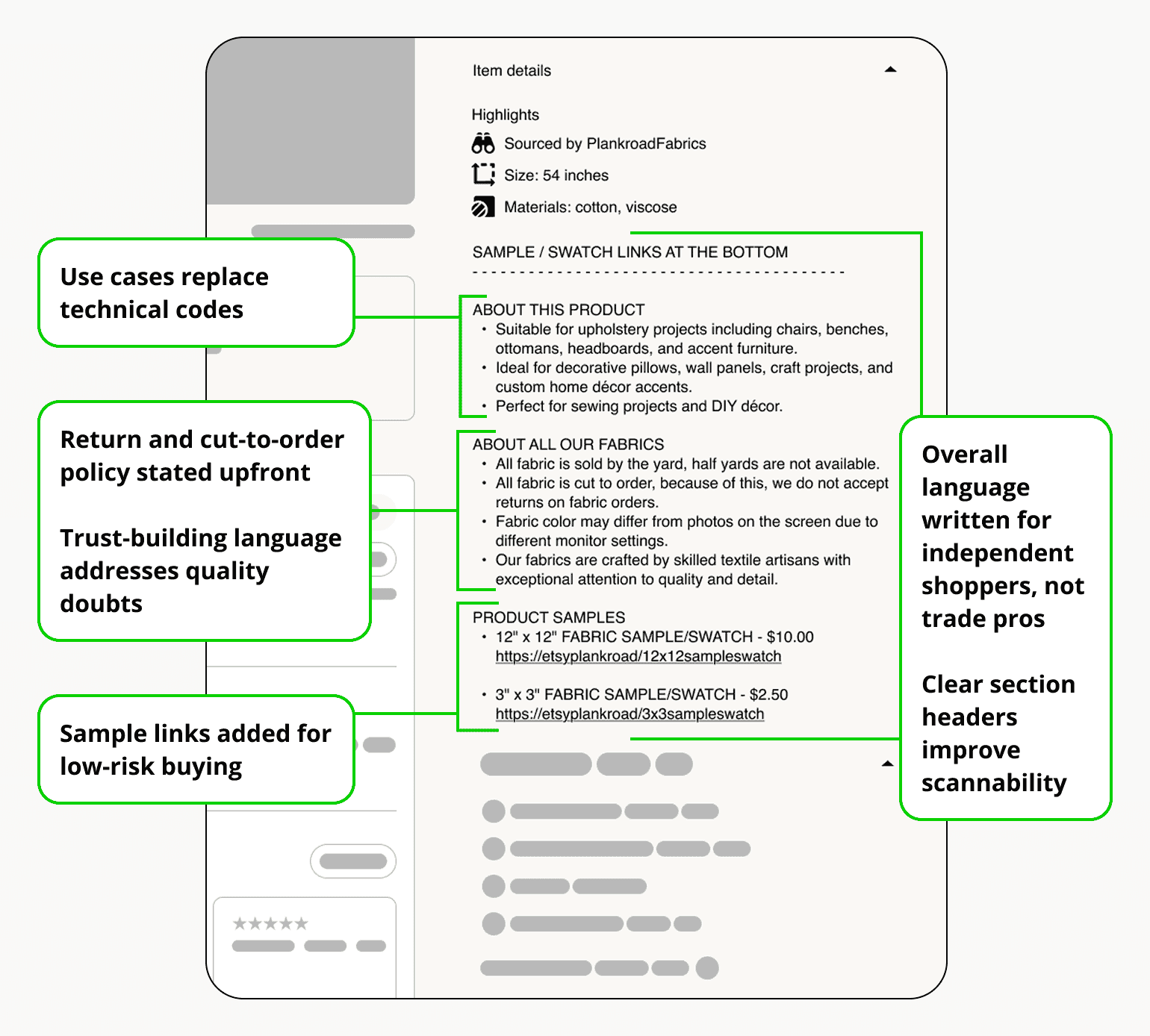
After
Shopper-first content built to inform, build trust, and sell.
REFLECTION ⬅
Looking Back
What I Did Well
Grounded Decisions in Stakeholder Data
Rather than defaulting to management's initial hypothesis (more traffic via tags), I synthesized customer service insights and clickpath analytics to identify the real root cause: a trust gap, not a visibility gap.
Balanced Impact With Constraints
Used an impact/effort matrix to rule out lower-value options early, delivering a high-impact solution that respected management's "no price reduction" boundary rather than treating it as an obstacle to argue against.
Advocated for the Right Scope
I was initially brought on for tag optimization alone. Recognizing that the real opportunity was broader, I made the case for expanding my role into UX writing and content strategy, work that ultimately became core to the project's impact.
What We Can Do Later
A/B Test Copy Variants
Future iterations could test specific phrasing (e.g., craftsmanship language vs. use-case-first language) to see which drives higher conversion, rather than relying on a single rewritten version.
Study Description Length
Explore how the length of a product description affects buyer confidence and conversion, since this project focused on what the copy said more than how much of it there was.
Expand Taxonomy Beyond Launch
Continue refining tag structure as new inventory is added, ensuring the system scales rather than requiring another manual overhaul.
What We Would Do Differently
Involve Customer Service Earlier
Their insight was the single most valuable input in this project; looping them in at the start, rather than mid-project, could have shortened the research phase.
Talk to Customers Directly
This project relied on secondary signals: clickpath data and customer service reports, rather than direct conversation with shoppers. Speaking with Etsy customers firsthand could have surfaced motivations and hesitations that aggregate data couldn't capture.
Document Baseline Metrics Rigorously
More detailed page-level data prior to launch would have made it easier to isolate which specific changes (copy vs. taxonomy vs. tagging) drove the most impact.